

“Social Justice, Legal Accountability, Bias, and Equity in AI and Biomedical Big Data.”
15 – 19 December 2025
hosted by the Eurolife DATAETHICS Network in Obergurgl, Austria
DOWNLOAD THE APPLICATION FORM HERE
Target Audience: Students from Eurolife institutions, including advanced undergraduates, postgraduates, and early-stage researchers in life sciences.
THEME SUMMARY
This year’s Winter School, organized by the Eurolife network, will delve into the pressing ethical, legal, and societal questions surrounding the use of Artificial Intelligence and Biomedical Big Data. With a focus on social justice, legal accountability, algorithmic bias, and equity, the program will critically examine how emerging technologies can both challenge and reinforce inequalities in healthcare and research. Participants will explore frameworks and strategies to ensure that innovation in biomedical data serves all populations fairly and responsibly.
KEY TOPICS
This year’s Winter School will address critical ethical, legal, and social issues emerging from the use of Artificial Intelligence and Big Data in biomedicine. Key topics include:
- Equity and bias in data and AI systems
- Ethics in clinical trials and public health research
- Legal accountability and international data governance
- Diversity and inclusion in biomedical research
- Global justice in digital health innovation
- Transparency and explainability in AI decision-making
Participants will engage with these pressing challenges to help shape a more just, responsible, and inclusive future for digital health.
WHY THE DATAETHICS WINTER SCHOOL
The 2025 Eurolife Winter School offers a unique, intensive 5-day program focused on one of the most pressing challenges of our time: ensuring social justice, legal accountability, equity, and fairness in the age of AI and biomedical big data. Their introduction will set the stage for an engaging, learner-centered experience, empowering participants to take an active role in shaping discussions and developing actionable insights.
Throughout the week, participants will benefit from:
- Lectures and workshops led by renowned experts in ethics, AI, law, public health, and biomedical data
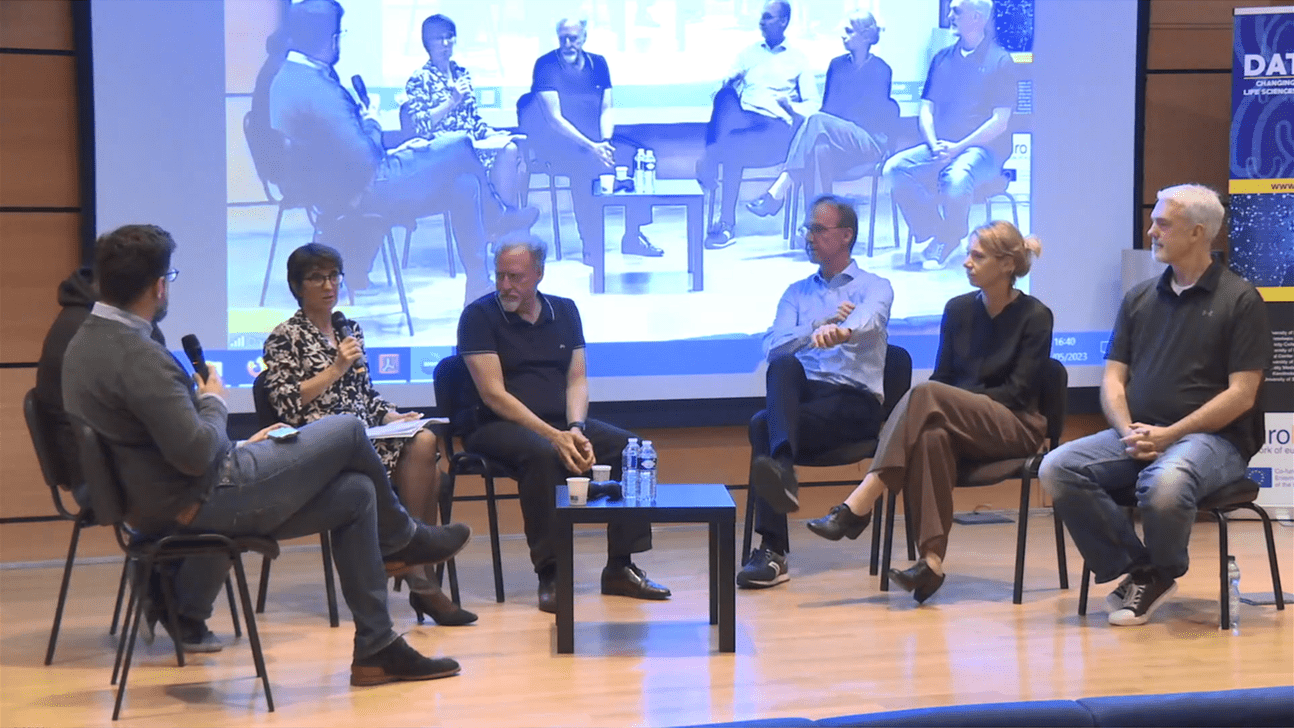
- Interactive discussions on current ethical, legal, and social issues in data-driven healthcare and research
- Networking opportunities with peers and professionals from top European medical and research institutions
- A collaborative, interdisciplinary environment that fosters both critical thinking and practical skills
In addition to keynote lectures and discussions, participants will engage in Problem-Based Learning (PBL) group sessions designed to foster active, collaborative exploration of the key ethical and societal challenges discussed throughout the program.
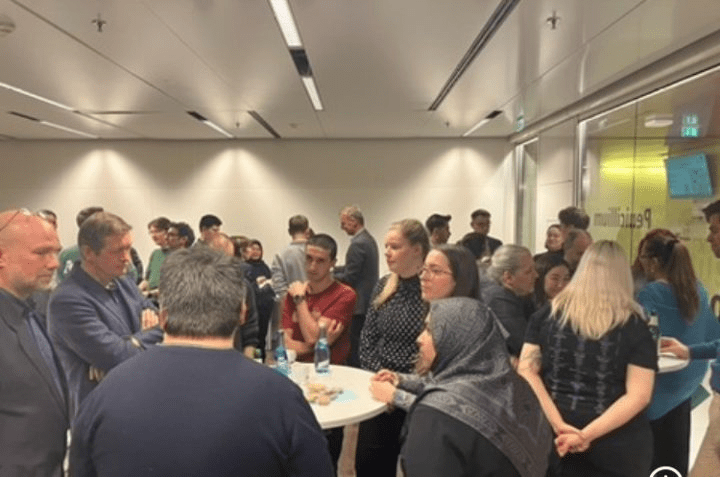
This year’s program features the Ethical Café – an innovative, interactive format first piloted at the DATAETHICS December 2024 events. The Café creates a stimulating, interdisciplinary environment where participants engage in guided discussions using “ethical postcards” to explore real-world ethical dilemmas from diverse cultural and professional perspectives. Its success has inspired its integration as a core part of the Winter School experience.
Whether you are preparing for a career in academia, health policy, law, or the tech industry, the Winter School will equip you with the tools to navigate and shape the ethical landscape of future biomedical innovation.
Join us to be part of a new generation of professionals who are not only data-literate, but also ethically grounded.
LEARNING OBJECTIVES
By participating in the Winter School 2025, you will:
- Understand the ethical, legal, and social dimensions of AI and big data in biomedicine, with particular attention to justice, accountability, equity, and bias.
- Explore the full value chain of data – from data collection and sharing to governance and application – in health and life sciences.
- Gain practical experience in identifying, analyzing, and responding to ethical challenges through interactive case studies and group exercises.
- Develop critical thinking skills by engaging in interdisciplinary and transcultural dialogue during innovative formats such as the Ethical Café.
- Learn to integrate ethical considerations into decision-making processes in research, clinical, regulatory, and technological settings.
- Strengthen your transversal competencies – including communication, ethical reasoning, teamwork, and intercultural understanding – essential for academic, policy, or industry careers.
- Acquire cutting-edge insights into responsible and inclusive innovation in AI and biomedical big data, applicable to your studies, research projects, or internships.
OUR SPEAKERS
The Winter School 2025 brings together a diverse group of internationally recognized experts whose research and professional work address key intersections of artificial intelligence, biomedical big data, and social justice. Reflecting the multidisciplinary nature of the event, the speakers’ backgrounds span bioethics, digital health, law, public policy, and data science.
Their expertise will guide participants through critical discussions on the ethical, legal, and societal implications of emerging technologies in healthcare and biomedical research. Topics include algorithmic bias, equitable data use, legal accountability, and the impact of the digital divide in health systems.
Featured Speakers:
- Dr. Elisa Houwink, Mayo Clinic
- Prof. P.J. Wall, Trinity College Dublin
- Dr. André Krom, Leiden University Medical Center
- Prof. Deborah Mascalzoni, Uppsala University & WHO advisor
- Prof. Sabine Ludwig, Medical University of Innsbruck
- Prof. Orsolya Márta Péter, Semmelweis University
- Dr. Georgios Exarchakis, University of Bath
- Prof. Georg Wietzorrek, Medical University of Innsbruck
- Prof. Yann Herault, University of Strasbourg
These experts will contribute to a dynamic program exploring the ethical, legal, and societal dimensions of AI and biomedical big data, with a focus on equity, justice, and responsible innovation.
The Problem-Based Learning (PBL) group sessions will be guided by Prof. Georg Wietzorrek (Medical University of Innsbruck) and Prof. Sandra Santos-Sierra, both experts in innovative pedagogical methods. Together, they will introduce and facilitate the Winter School’s PBL with Inverted Learning approach, designed to encourage critical thinking, peer learning, and the practical application of theoretical concepts.
AWARD
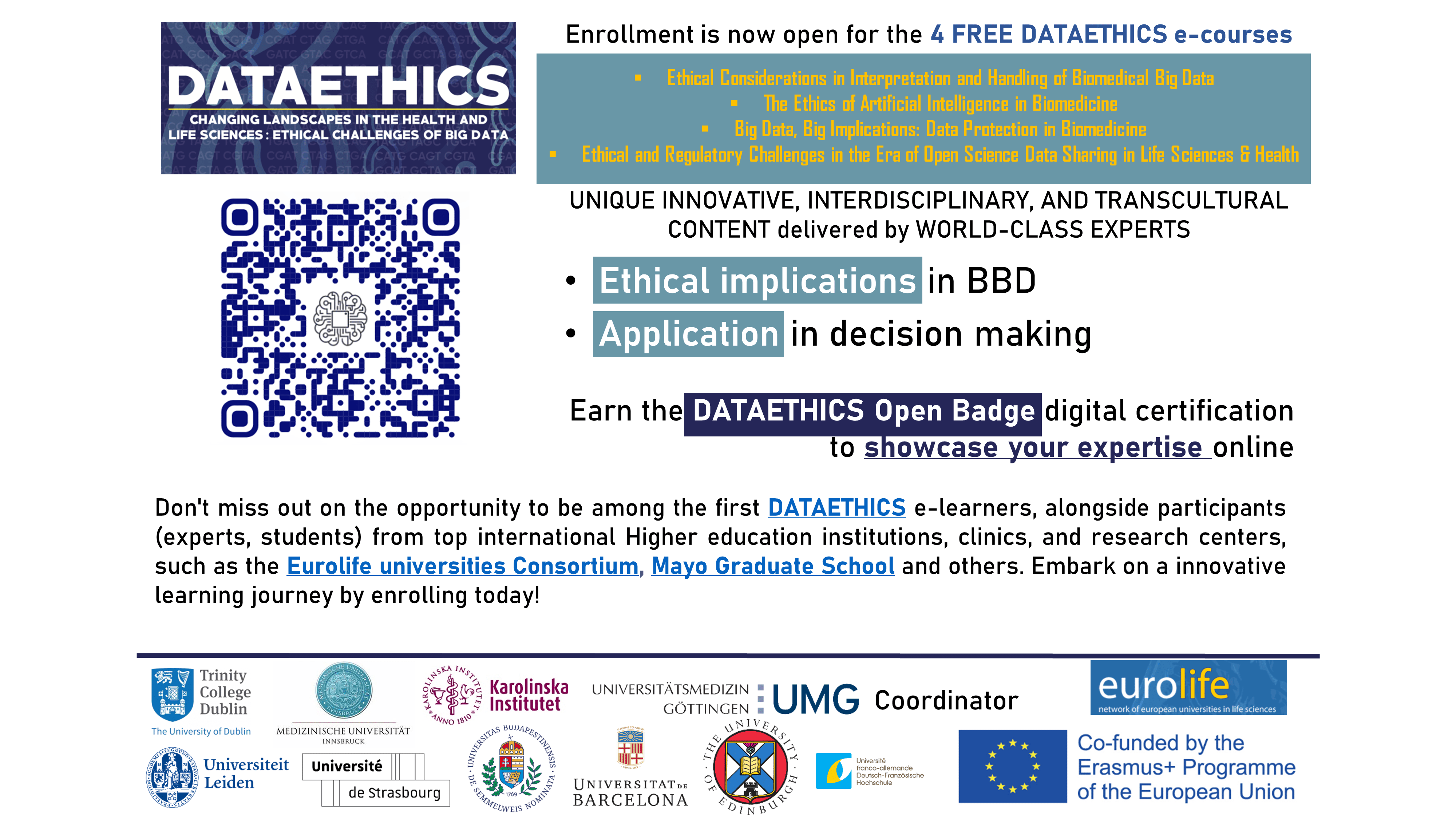
Students participating in the DATAETHICS Winter School will be awarded a certificate of participation. Furthermore, students will receive the DATAETHICS Open Badge for recognition of their qualifications.This innovative certification method, the DATAETHICS Open Badge, will allow the participants to digitally showcase the skills and competences they gained during the Winter School.
PARTICIPANTS PROFILE
The course welcomes BSc, MSc and PhD students from the fields of medicine, biomedicine and life sciences from the 9 DATAETHICS Partner Universities, as well as from the University of British Columbia associated with Eurolife. Proficiency in written and spoken English is required.
To ensure active participation and exchange with teaching staff and fellow participants, as well as transnational character of the course, a maximum of 30 participants will be admitted to this course, with balanced representations of participants per partner institutions. In addition, in case of equal quality of applications, students with disabilities will be given priority in the selection process.
The Eurolife DATAETHICS Winter School grant will cover the participants’ joining fee and accommodation (Half Board) costs.
Please Note: The EuroLife Winter School 2025 grant does not cover travel expenses. Participants are responsible for arranging and funding their own travel to the event. For more information and potential travel funding opportunities, please contact your local EuroLife liaison officer.
APPLICATION
Deadline, now extended: To apply, please submit your application by 17:00 CEST 20 October 2025.
DOWNLOAD THE APPLICATION FORM (with further instructions) HERE
Applications should include the completed application form, a CV, and a motivation letter (200-300 words explaining the predicted impact of the participation on the Candidate’s academic/research career).
All applicants will be notified on the selection results per email by 5 November 2025
For tentative program, please visit HERE
Join us for this unique opportunity to explore the cutting-edge issues at the intersection of ethics, law, and technology in the realm of AI and Biomedical Big Data!
We look forward to welcoming you to Obergurgl